
How to Mulch Trees Correctly (Skip the Volcano)
When addressing how to mulch trees in Northeast Oklahoma, prioritize immediate personal safety, check for downed power drops, and document all damage with clear photos before moving limbs. In Green Country, severe weather like tornadoes and ice storms places immense mechanical stress on oak, maple, and hackberry limbs. Calling an insured, technical tree service ensures dangerous spring-loaded branches are dismantled safely without compounding structural damage.
Understanding How to Mulch Trees Correctly (Skip the Volcano) in Northeast Oklahoma
Oklahoma's climate creates unique hazards for urban and rural trees. Spring supercell thunderstorms bring straight-line winds surpassing 70 mph, while winter ice storms coat branches with hundreds of pounds of glaze ice. Species common to Green Country—such as silver maples, post oaks, water oaks, and invasive Bradford pears—each react differently to environmental stress. Understanding these dynamics is critical when navigating how to mulch trees.
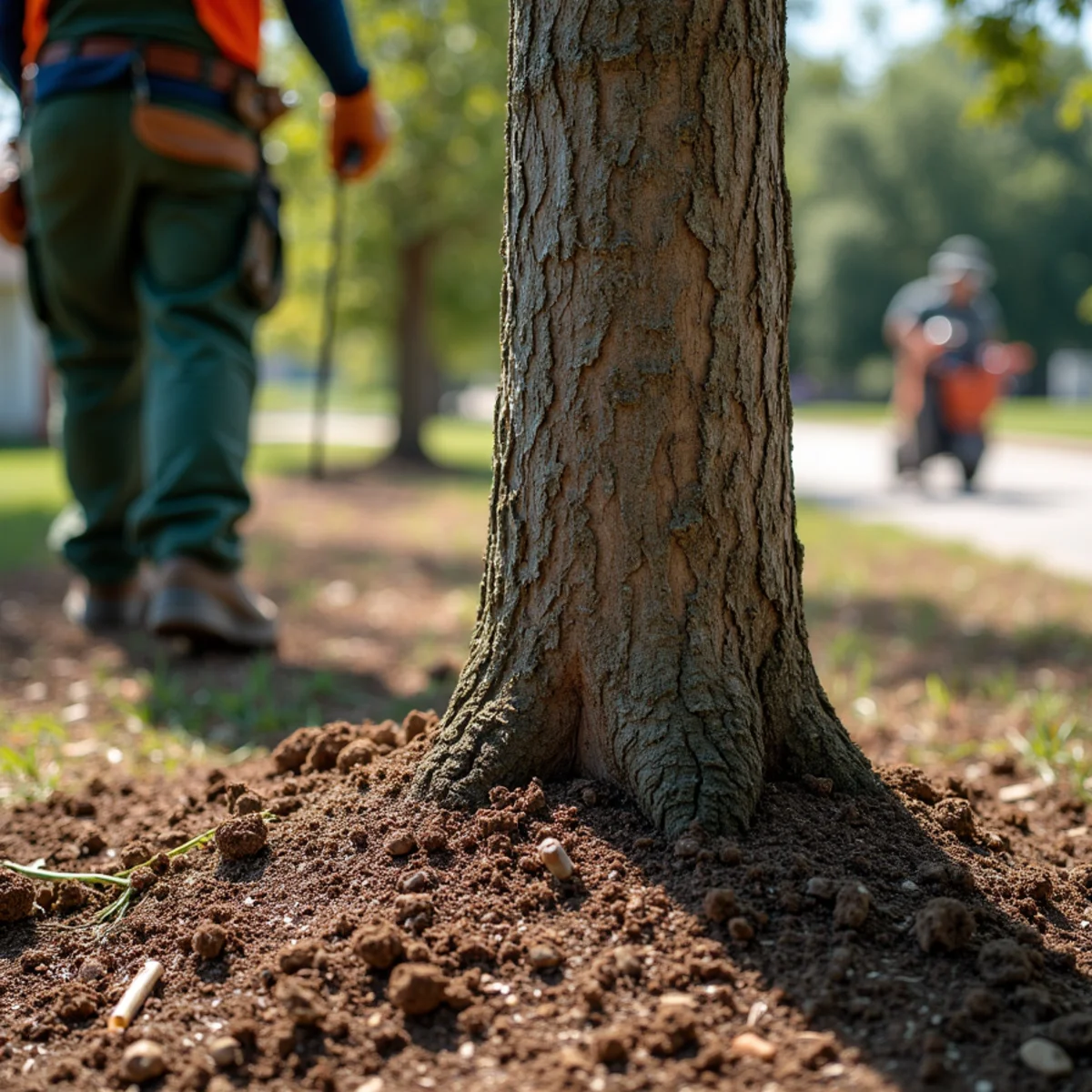
- Inspect the trunk base for fungal conks, mushrooms, or heaving soil indicating root plate failure.
- Check for co-dominant stems with included bark, which split easily in high wind.
- Ensure branches are clear of electric service lines running from the utility pole to your home weatherhead.
- Verify contractor insurance coverage (demand a certificate of general liability) before work begins.
Safety Protocols and Property Protection
Attempting to tackle large tree hazards with a consumer chainsaw without proper rigging training is among the most dangerous homeowner tasks. Downed trees frequently store massive mechanical energy; cutting a trunk under tension can trigger violent spring-back. Professional tree crews use relief cuts, directional felling notches, and tagline control to dissipate energy safely.
Costs, Insurance, and Local Regulations
When dealing with how to mulch trees, homeowners often ask about costs and insurance coverage. If a tree falls on a covered structure (such as your home, garage, or shed), homeowners insurance policies typically cover the cost of removing the tree from the structure and making temporary tarp repairs. For general tree trimming and maintenance, costs depend on tree height, accessibility, and debris haul-off.
| Factor | Typical Scope | Impact on Price & Safety |
|---|---|---|
| Tree Height & Diameter | Small (under 25ft) to Large (over 60ft) | Larger trees require advanced climbing or bucket access |
| Proximity to Structures | Clear lawn vs tight roofline proximity | Tight quarters require complex rope rigging and friction lowering |
| Power Line Proximity | Near service drop vs high voltage line | Requires coordination with PSO or rural electric cooperatives |
| Debris Clean & Haul | Leave firewood vs full chip & haul-off | Full debris haul-off and raking leaves property spotless |
Mulch Application Best Practices vs. Destructive Volcano Mulching
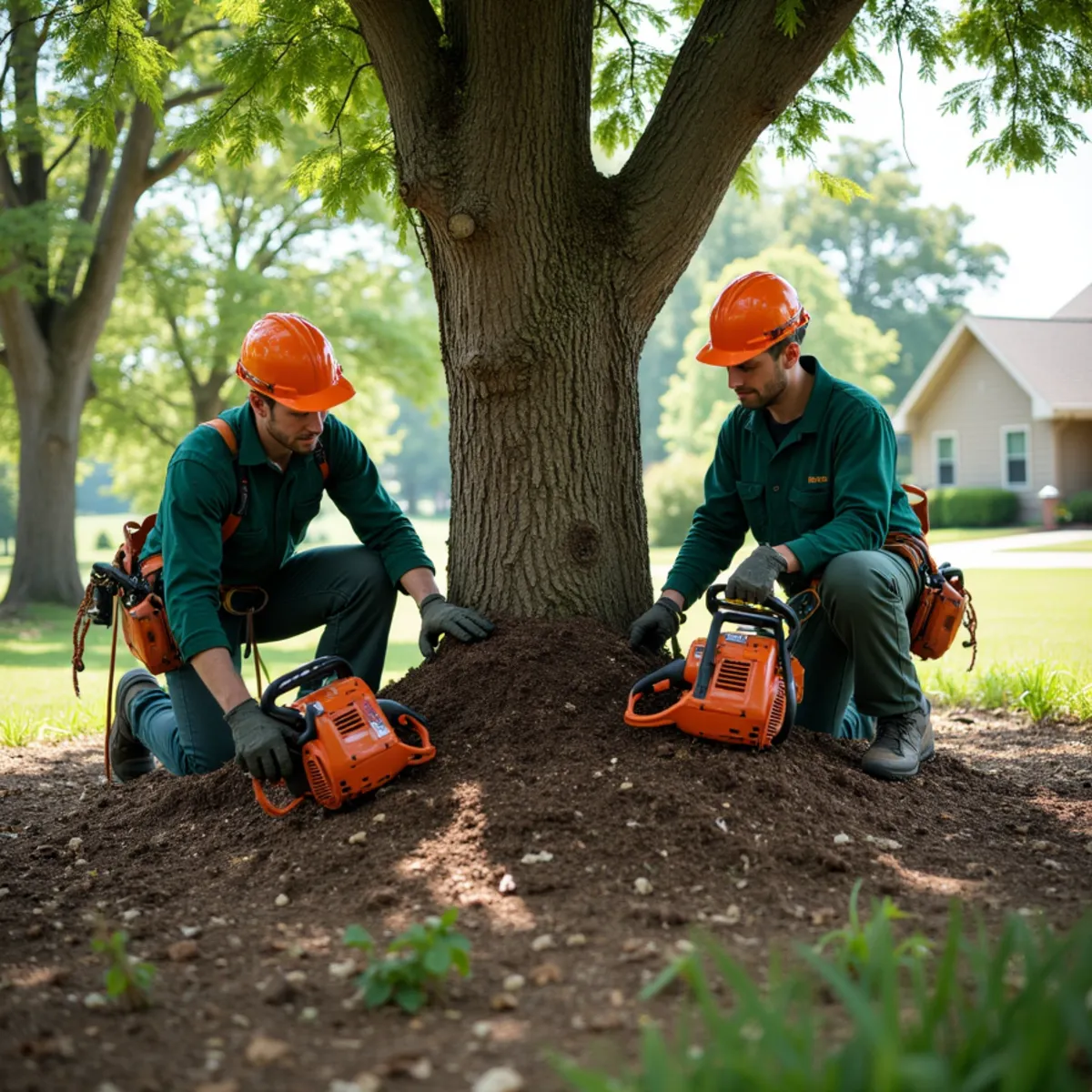
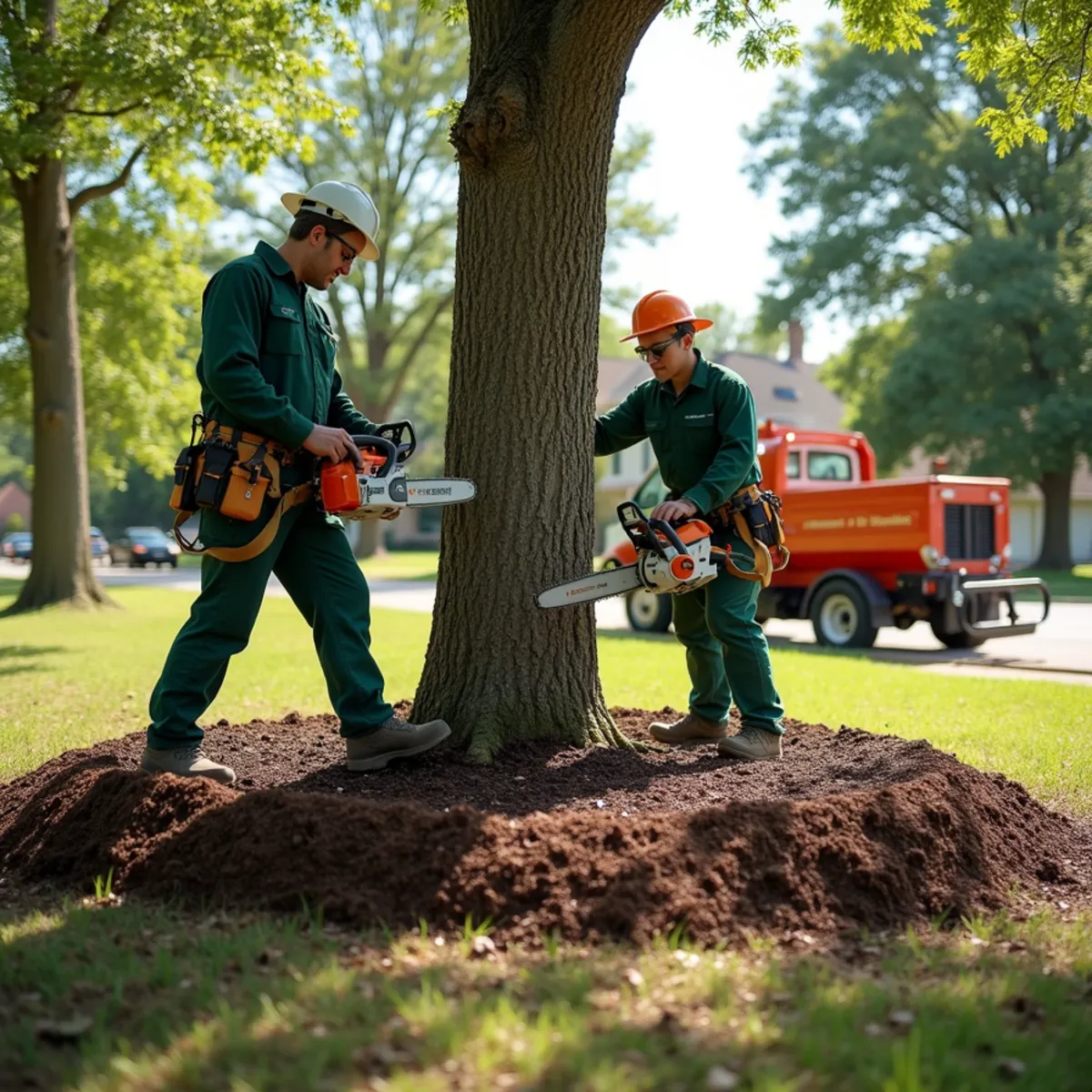
Proper mulching is one of the most beneficial cultural practices for landscape trees in Northeast Oklahoma, yet 'mulch volcanoes' (piling mulch 6 to 12 inches high against the trunk) remain a widespread and damaging suburban landscaping mistake. Piling mulch against bark suffocates root collars, traps fungal moisture, and encourages circling girdling roots that eventually choke the tree.
| Mulching Practice | Proper Arborist Technique | Common Landscaping Error | Consequence to Tree Health |
|---|---|---|---|
| Trunk Clearance | Leave 3 - 4 inches of bare root flare | Piling mulch against trunk (volcano) | Bark rot, fungal decay, insect boring |
| Mulch Depth | Uniform 2 to 4 inches depth | Excessive 6 to 12 inches depth | Root suffocation; soil oxygen depletion |
| Mulch Diameter | Extend out to canopy drip line | Tiny 2-foot ring around trunk | Roots outside circle remain hot & dry |
| Material Choice | Shredded arborist wood chips/bark | Dyed rubber or fine cypress dust | Impedes water absorption; leaches chemicals |
Selecting the Best Organic Mulch for Northeast Oklahoma Soils
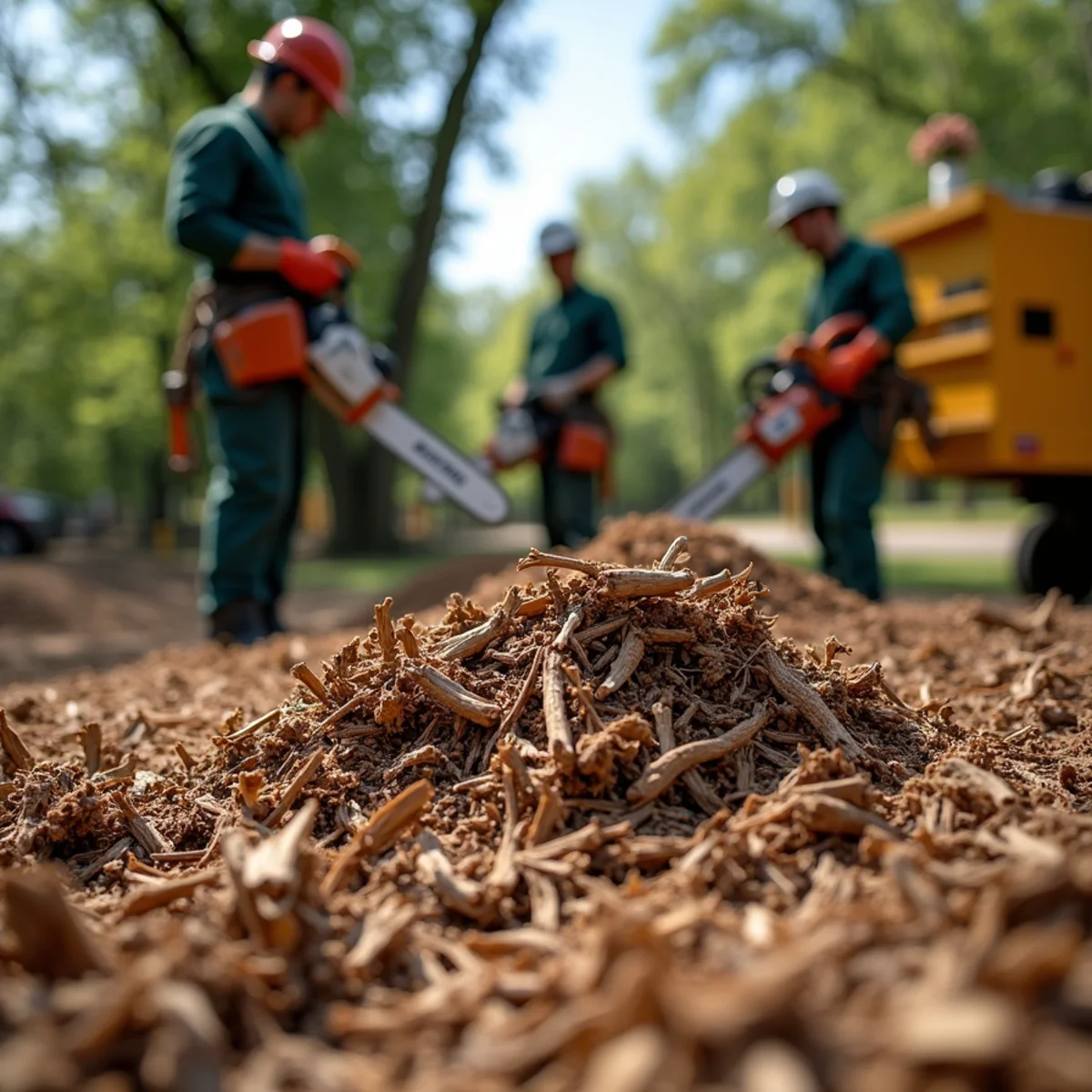
Coarse, uncomposted arborist wood chips produced by local tree pruning operations are far superior to bagged shredded cypress or dyed mulch. Coarse chips contain a blend of bark, wood, and leaf matter that breaks down gradually, feeding beneficial mycorrhizal fungi and conditioning heavy Oklahoma clay without compacting into an impermeable crust.
Austin Joice's Field Notes from the Canopy: Mycorrhizal Colonization & Soil Thermal Regulation
Whenever I walk property assessments around Mazie, Pryor, and Broken Arrow, I make a point of inspecting the base of every shade tree. When mulch is piled high against a trunk flare, the tree is essentially living in a warm, moist compost heap that rots protective outer bark tissue and suffocates the root collar's oxygen exchange. Beneath a proper 3-inch layer of unpainted, coarse arborist wood chips, however, an entirely different biological ecosystem flourishes. Coarse wood chips insulate Oklahoma clay soils, keeping root zone temperatures 10 to 15 degrees cooler during 105-degree August afternoons. As chips decompose slowly from below, they cultivate beneficial mycorrhizal fungal networks that expand root absorption capacity and attract earthworms that naturally aerate compacted soil without mechanical tilling. For trees planted in heavy Mayes County clay, coarse arborist wood chips create an optimal moisture buffer that prevents soil cracking during dry summer spells. Austin Joice ensures all mulch borders taper to zero depth at the root flare.
At Joice Tree Service, owner Austin Joice frequently encounters how to mulch trees during storm recovery and hazardous removals. Trees subjected to Oklahoma's severe weather cycles often exhibit internal rot, hollow cavities, or weak branch unions that make DIY cutting extremely hazardous. Professional rigging with Port-a-Wrap friction devices and arborist blocks allows heavy sections to be lowered safely under tension.
Need Professional Tree Advice on Your Property?
Call Austin Joice at (213) 468-5153. We inspect your trees on site, explain which can be pruned and which require removal, and provide a free written estimate.
Frequently Asked Questions
First assess the situation from a safe distance. If electrical lines are involved, stay clear and contact your utility. Document damage with photos and call Joice Tree Service at (213) 468-5153 for an inspection.